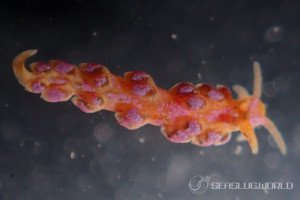
Tenellia beta (Baba & Abe, 1964)
- Location
- Sangashita, Hayama, Kanagawa, Japan
- Date
- 2025/12/28
- Length
- 3mm
- Depth
- 5.0m
- Water temperature
- 16.0℃
Description
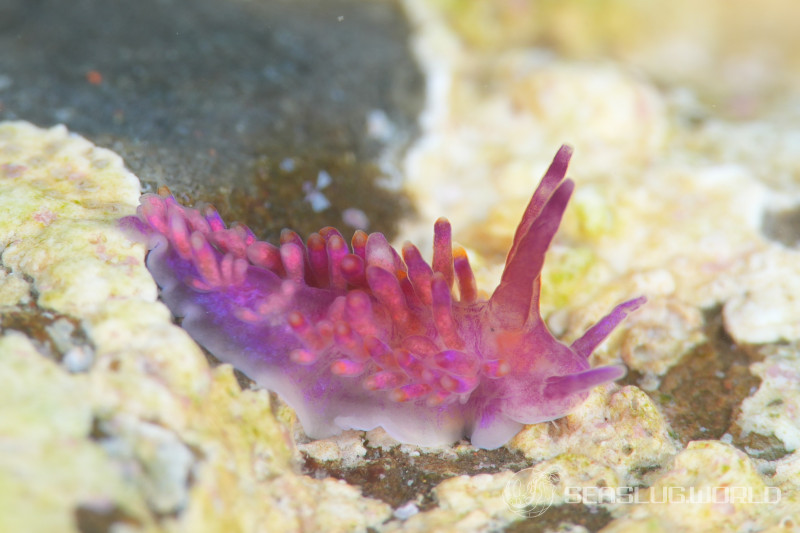
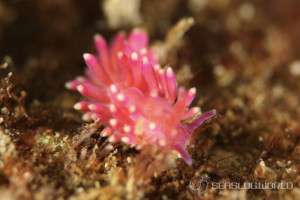
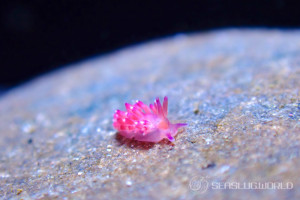
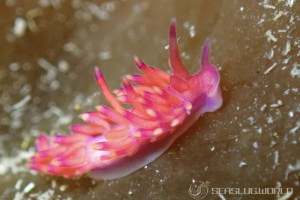
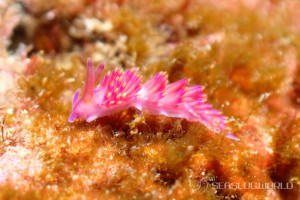
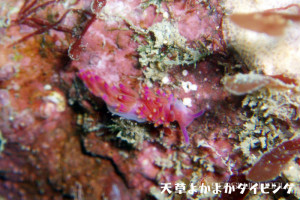
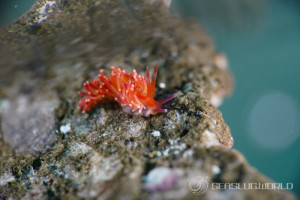
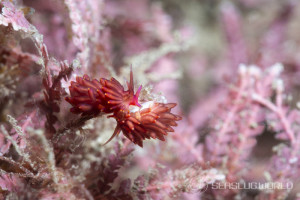
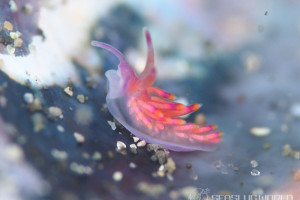
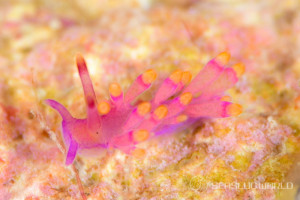
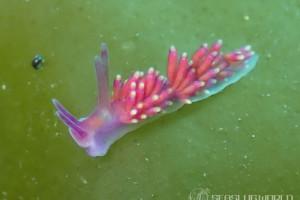
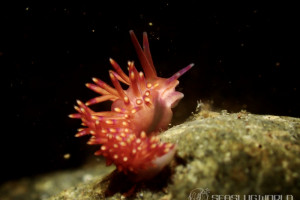
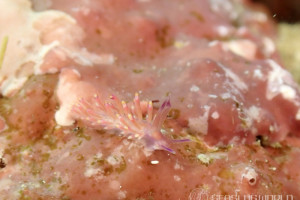
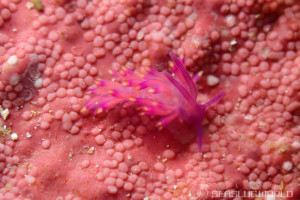
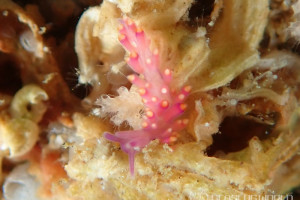
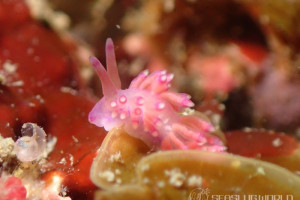
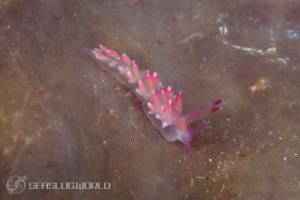
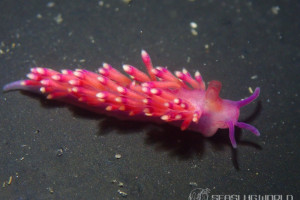
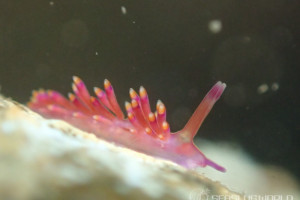
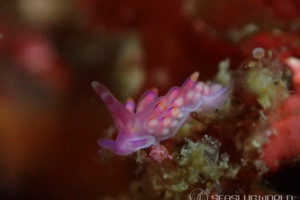
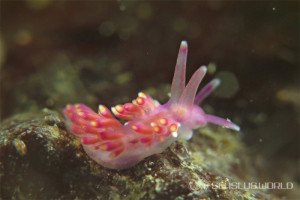
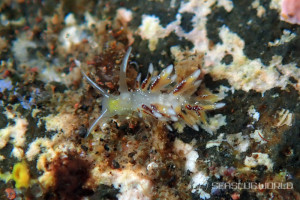
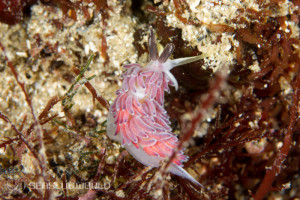
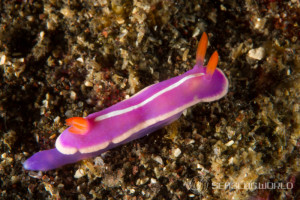
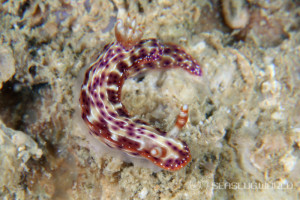
A small aeolid with a pale purplish red body, deeper towards the head and around the rhinophores. The cerata are short and fusiform, each marked with a deep purplish red band near the tip and showing the orange-yellow liver-diverticulum within. They are arranged in roughly 7 oblique rows on each side, with the largest rows containing about 3 cerata. Both the rhinophores and the oral tentacles are rather short, and the rhinophores are smooth and unbranched. Mature animals reach only about 2 mm in length; the largest paratype examined was 6 mm.Distribution
Japan, on the Sea of Japan side of Honshu. The type locality is the shore at Ogi, Toyama Bay, near the Noto Marine Laboratory of Kanazawa University. Paratypes were also collected at Kannonzaki (Toyama Bay), Suizu-Okazaki (Tsuruga Bay), and Sado Island.Etymology
The specific epithet beta refers to the Greek letter beta (β). The species shows a Cuthona-type radula, in which each tooth has a strongly projecting median cusp, combined with a Catriona-type penis bearing an apical chitinous stylet. Baba & Abe placed the species tentatively in Catriona while flagging this mosaic of characters; the use of β apparently signals an intermediate or atypical position rather than a fully typical member of either genus.Remarks
A small aeolid originally described in Catriona and now placed in Tenellia. In the original description it was compared with the northern Japanese species Nella osyoro (described as Cuthona osyoro), which shares the general body form and the banded cerata; Tenellia beta differs externally in its purplish red ground colour (osyoro is whitish) and in its more numerous lateral denticles on the radular teeth. The Japanese name "Tsukumo-minoumiushi" was proposed in the original paper after Tsukumo (Kukumon) Bay at Ogi, Noto Peninsula, the location of the Noto Marine Laboratory.References
A Kindle field guide by the site author
Kimoto N. (2026). Sea Slugs of Japan & the Indo-Pacific, 2nd Edition.
Kindle Edition
View on Amazon PR (Amazon Associates)Seasonality
Shooting Locations
Loading shooting locations...
Photos of Tenellia beta



















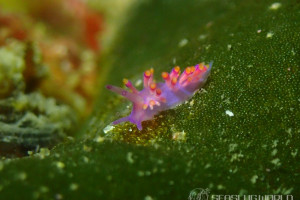
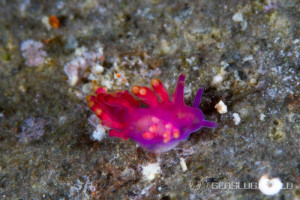

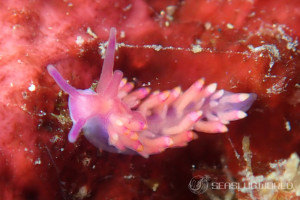

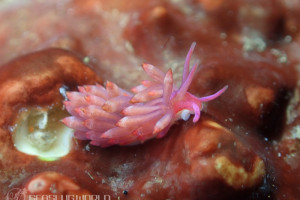
Same Genus Nudibranchs
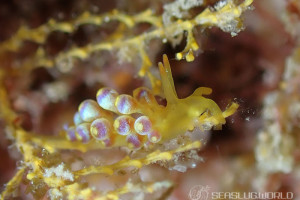
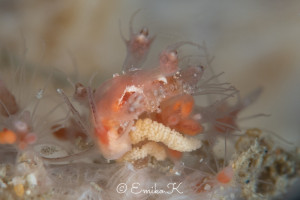
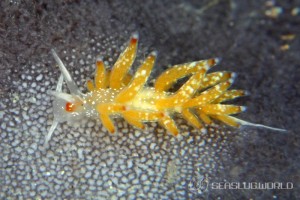
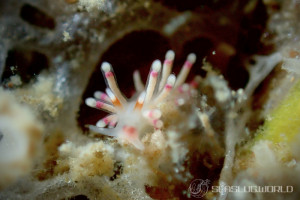
Similar Colors Nudibranchs


Academic Database
Sea slug observation data is available in international marine biodiversity databases.