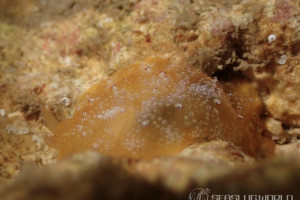
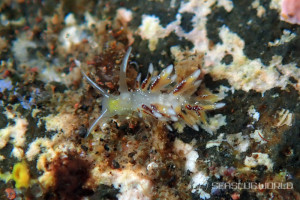
Abronica payaso A. Y. Kim & Gosliner, 2024
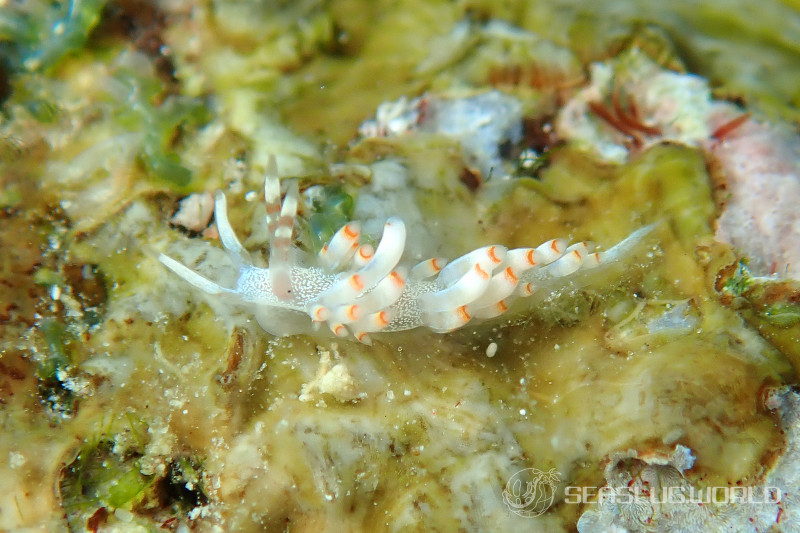
- Location
- Taketomi South, Ishigaki and Yaeyama, Okinawa, Japan
- Date
- 2023/01/18
- Length
- 10mm
- Depth
- 10.0m
- Water temperature
- 21.0℃
Description
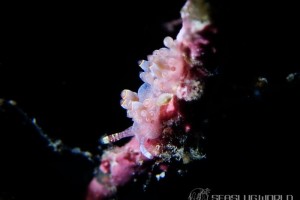
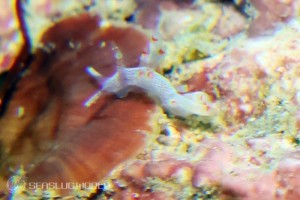
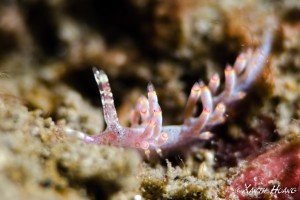
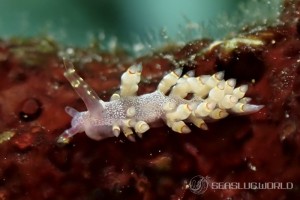
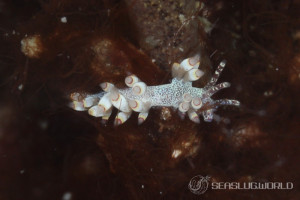
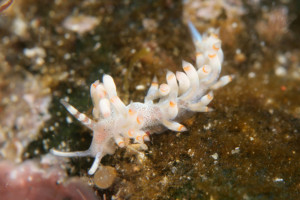
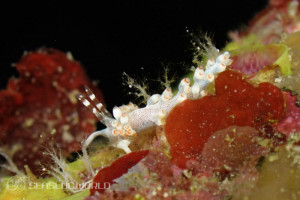
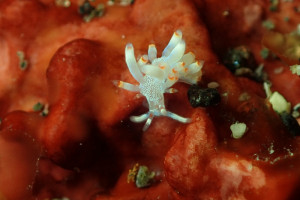
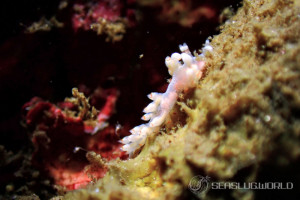
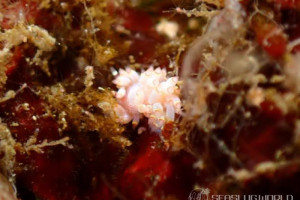
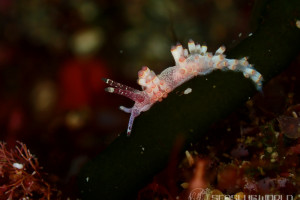
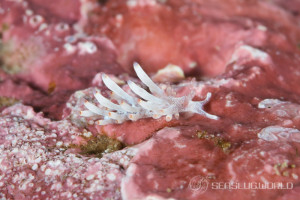
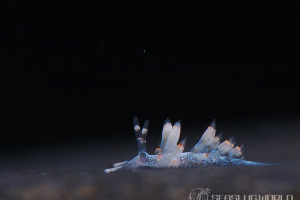
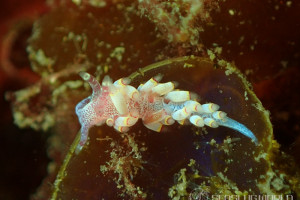
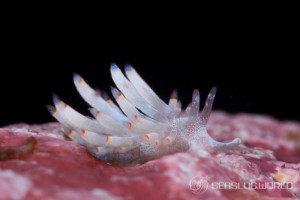
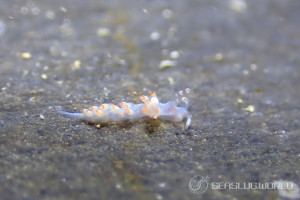
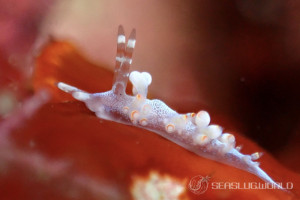
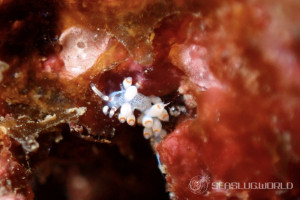
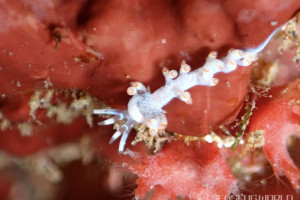
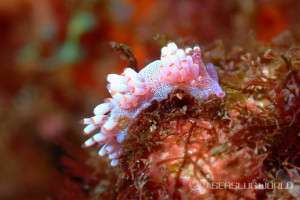
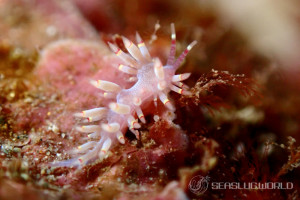
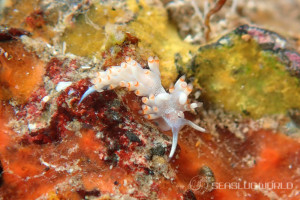
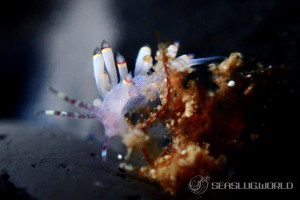
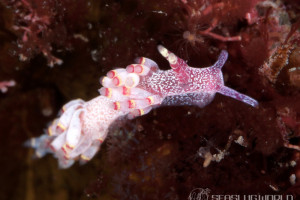
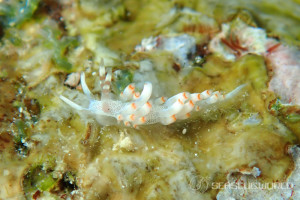
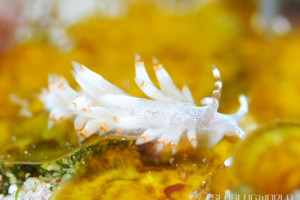
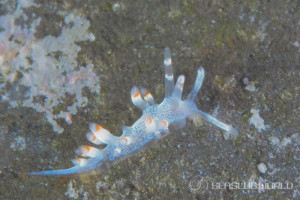
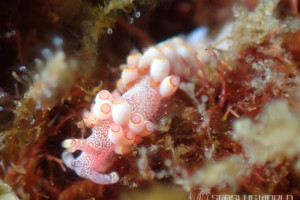
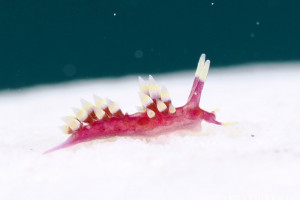
A small aeolid with a translucent whitish body and contrasting patches of opaque orange and white pigment. Cerata are fusiform and relatively short, with opaque orange pigment concentrated on parts of each ceras.Distribution
Type locality and major records from the Philippines (Mainit Point, Mabini, Batangas area). Western to central Pacific.Etymology
From the original description (Kim, Donohoo & Gosliner, 2024):The name comes from the Filipino word payaso, meaning clown owing to the colorful ornamentation on the body of this species.
Remarks
Previously figured as Cuthona sp. 6, recovered as a distinct species in a 2024 revision and assigned to Abronica. COI p-distance of 21.6% from A. abronia and 20.5% from A. purpureoanulata. Possesses the sharply pointed curved penial stylet that defines Abronica.References
- ミノウミウシ小目の 1 種 2, 中野理枝, 朝倉知子, 池田紫, 石川雅教, 今本淳, 岩瀬南美, 西田和記, 堀江諒, 山田久子 & 渡井久美. (2017). 奄美大島北部海域における後鰓類相の調査報告. Kuroshio Biosphere. 13: 1-18 + 6 pls.
- Abronica sp. 3, Terrence Gosliner, Ángel Valdés and David Behrens. (2018). Nudibranch and Sea Slug Identification Indo-Pacific 2nd Edition. New World Pubns Inc.
- ザマミミノウミウシ(新称), 小野篤司 & 加藤昌一. (2020). 新版 ウミウシ. 誠文堂新光社.
- Abronica payaso Kim and Gosliner, sp. nov., Kim A.Y., Donohoo S.A. & Gosliner T.M. (2024). Stirring up the muck: the systematics of soft-sediment Fionidae (Nudibranchia: Aeolidina) from the tropical Indo-Pacific. PeerJ. 12: e18517. https://doi.org/10.7717/peerj.18517
Featured in this book
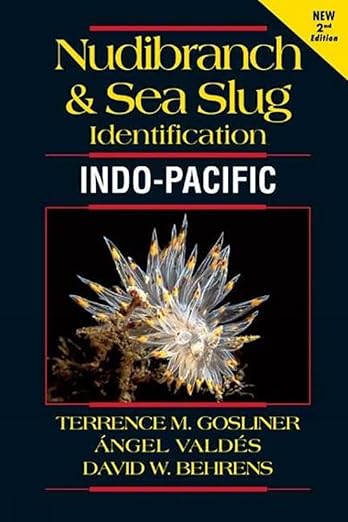
Terrence Gosliner, Ángel Valdés and David Behrens. (2018). Nudibranch and Sea Slug Identification Indo-Pacific 2nd Edition. New World Pubns Inc.
New World Publications
This species, Abronica payaso, is included in the book.
View on Amazon PR (Amazon Associates)Seasonality
Shooting Locations
Loading shooting locations...
Photos of Abronica payaso























Same Genus Nudibranchs


Similar Colors Nudibranchs
Academic Database
Sea slug observation data is available in international marine biodiversity databases.