Trapania naeva Gosliner & Fahey, 2008
- Location
- Red Beach, Okinawa Island (East coast), Okinawa, Japan
- Date
- 2015/01/01
- Length
- 20mm
- Depth
- 12.0m
- Water temperature
- 22.0℃
Description
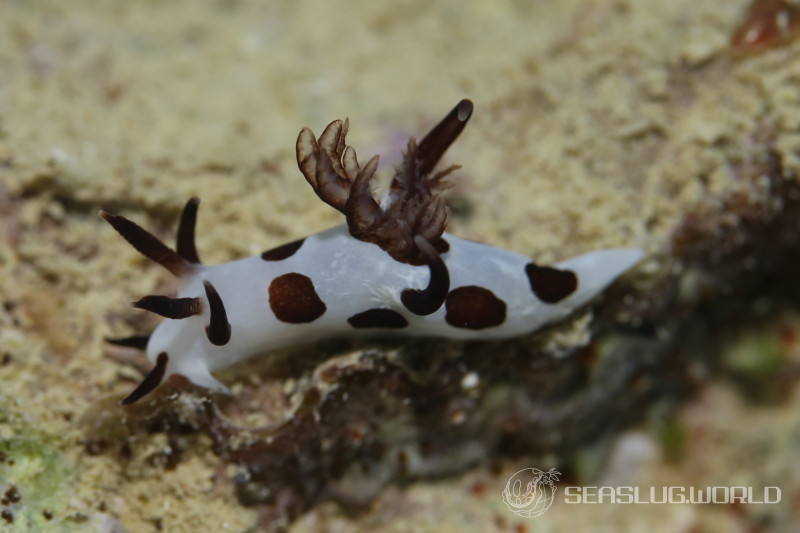
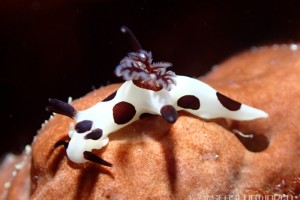
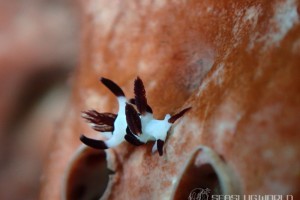
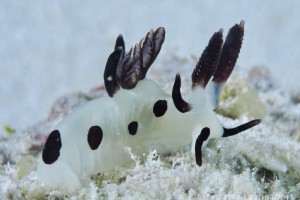
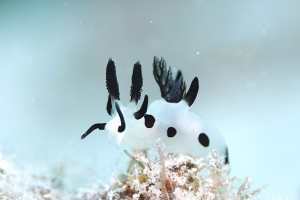
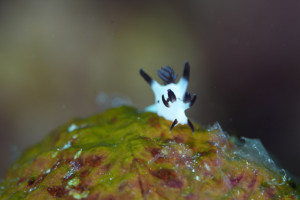
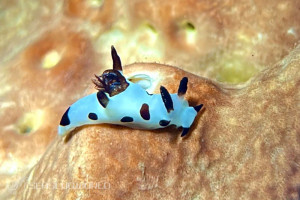
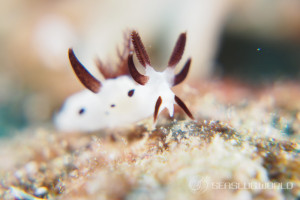
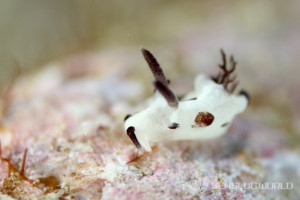
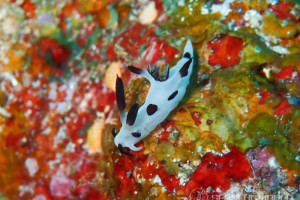
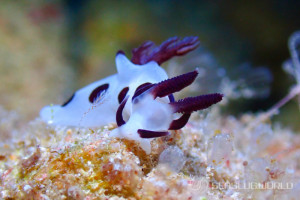
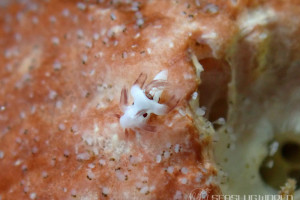
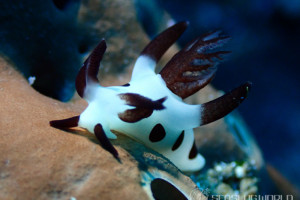
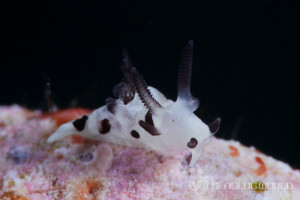
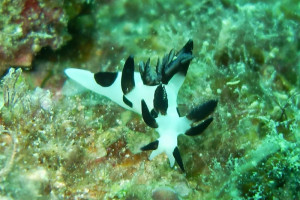
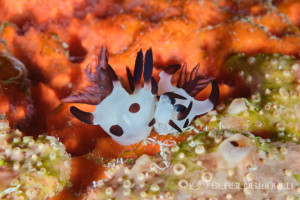
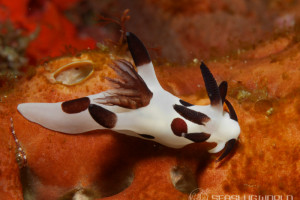
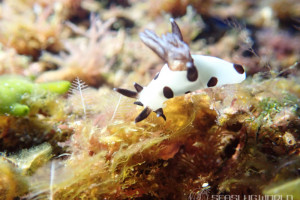
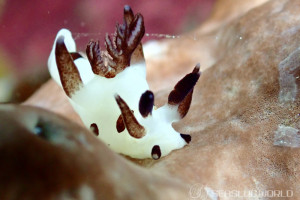
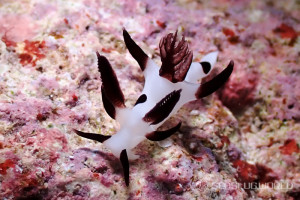
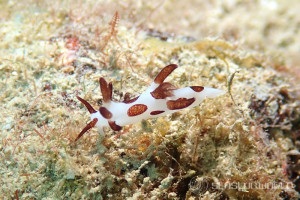
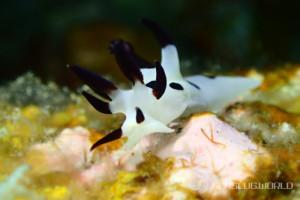
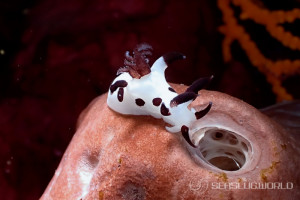
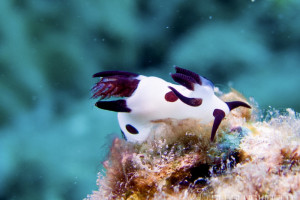
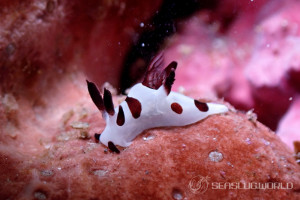
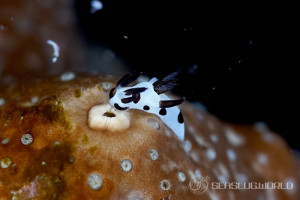
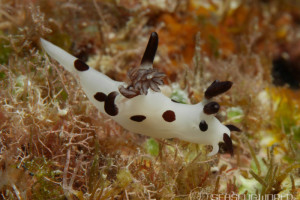
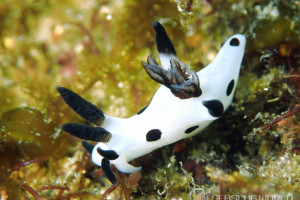
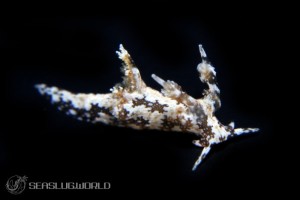
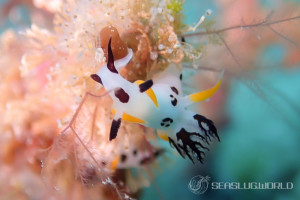
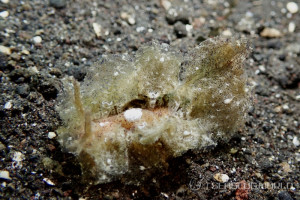
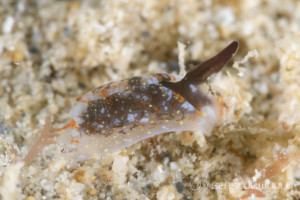
Body 5–7 mm long, elongate and convex, lacking a notal margin; the body only slightly broadens in the branchial region. Oral tentacles are short and cylindrical with curved apices. Rhinophores are relatively short with 12–14 lamellae; the apex is simply rounded without an extended appendage. Extra-rhinophoral appendages are relatively short and have a curved apex. Extra-branchial appendages are nearly upright and stout. Gill of three tripinnate branches.The body is white and nearly transparent. There are large blotches of black pigment arranged somewhat symmetrically along the sides of the dorsum, and one patch on the anterior side of the foot. Anterior head tentacles are white. Oral tentacles are dark brown or black. Extra-rhinophoral and extra-branchial appendages are the same dark brown or black as the oral tentacles, but the bases of the extra-branchial appendages are white. Rhinophores and gill leaves are dark brown or black.
Distribution
Indonesia, Fiji, Tanzania, Kenya, Rodrigues Island, Reunion, Maldives, Northwest Australia and the Kerama Islands (type locality: Zamami Island).Etymology
Verbatim from the original description (Gosliner & Fahey, 2008, p.86):The specific name naeva is from the Latin word meaning 'mole' or 'birthmark' to describe the large blotches of black pigment on the dorsum of this species.
Remarks
Described as one of 16 new Indo-Pacific Trapania species in Gosliner, T.M. & Fahey, S.J. 2008 Zoological Journal of the Linnean Society 152: 53-111. The authors noted that T. naeva "most closely resembles Trapania darvelli Rudman, 1987 from Hong Kong ... But T. naeva differs markedly in having large black patches over the surface of the body" (p.88). T. naeva and T. circinata are also "the only species known to have a rounded rhinophoral apex without a distinct appendage" (p.88). The Japanese vernacular name "Panda-tsuno-umiushi" alludes to the giant-panda-like black-and-white coloration.References
- Trapania sp. 1 (Rudman, Sea Slug Forum), Rudman W.B. (1998-2010). Sea Slug Forum. Australian Museum, Sydney. http://www.seaslugforum.net/
- パンダツノウミウシ(仮称), 益田一. (1999). 海洋生物ガイドブック. 東海大学出版会.
- パンダツノウミウシ(仮称), 小野篤司. (1999). ウミウシガイドブック. TBSブリタニカ.
- トラパニア属の一種, 殿塚孝昌. (2003). ウミウシガイドブック〈3〉. TBSブリタニカ.
- Trapania sp. 2 (Nakano 2004), 中野理枝. (2004). 本州のウミウシ. ラトルズ.
- Trapania naeva sp. nov., Gosliner T.M. & Fahey S.J. (2008). Systematics of Trapania (Mollusca: Nudibranchia: Goniodorididae) with descriptions of 16 new species. Systematics and Biodiversity. 6(1): 53-98. https://doi.org/10.1017/s1477200007002587
- Paz-Sedano S., Moles J., Smirnoff D., Gosliner T.M. & Pola M. (2024). A combined phylogenetic strategy illuminates the evolution of Goniodorididae nudibranchs (Mollusca, Gastropoda, Heterobranchia). Molecular Phylogenetics and Evolution. 192: 107990. https://doi.org/10.1016/j.ympev.2023.107990
- PAZ-SEDANO S., COBB G., GOSLINER T.M. & POLA M. (2024). Filling gaps in the knowledge of Goniodorididae taxa (Mollusca, Gastropoda, Nudibranchia) with description of seven new species. Zootaxa. 5443(4): 523-547. https://doi.org/10.11646/zootaxa.5443.4.3
A Kindle field guide by the site author
Kimoto N. (2026). Sea Slugs of Japan & the Indo-Pacific, 2nd Edition.
Kindle Edition
View on Amazon PR (Amazon Associates)Seasonality
Shooting Locations
Loading shooting locations...
Photos of Trapania naeva
Tag:






















Same Genus Nudibranchs
Similar Colors Nudibranchs

Academic Database
Sea slug observation data is available in international marine biodiversity databases.